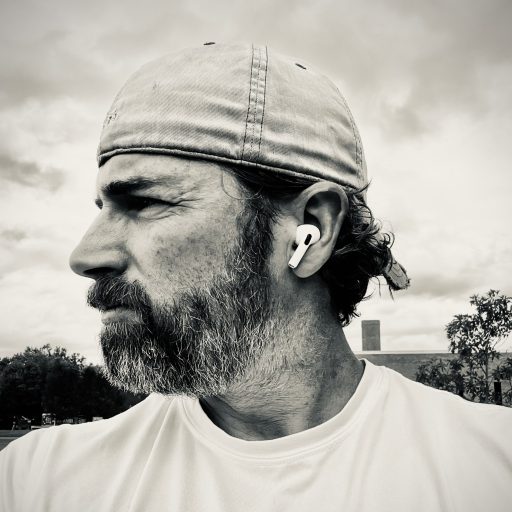
As we follow Jesus we not only discover the reality of who he is, but we also see the truth about ourselves.
When our youngest daughter, Opall, is in conversation with us and a mirror is close by, she will inevitably look at herself in the mirror while directing her words to us. As we listen to her talk, we look at her while she is looking at her, making her the focus of everyone in the conversation!
Now, this is most likely the normal fascination of “seeing what everyone else sees.” I’m guessing we all have this compulsion to different degrees when we look in the mirror, take a selfie or glance at a storefront window as we stroll downtown.
We want to see what others see. And the same is true in our relationship with God. We want to see what God sees in us — and whether or not we see what he sees — is a concept worth considering.
John 9 tells a beautiful story about a young man born blind. He is healed on the sabbath with spit, mud and the words of Jesus sending him away to wash his face.
Following the miracle, there is a lot of dust kicked up by the neighbors who knew him when he was blind and the religious leaders who were curious how he could all of a sudden see.
Jesus is despised for not keeping the Sabbath, the man born blind is questioned like he’s now in trouble, and his parents are afraid of saying the wrong thing and getting kicked out of church!
Eventually, the young man is summoned a second time to explain what went down.
At this point the disgruntled religious leaders seem less curious about the man’s newfound sight and more concerned about pinning down Jesus as a sinner.
He responds to their questions with one of his more famous lines, “Whether he (Jesus) is a sinner I do not know. One thing I do know, that though I was blind, now I see.”
Imagine if we heard a testimony like that from a young man in the waters of baptism. “I don’t know if Jesus is a sinner or not, but I do know he saved my life!”
How would we respond?
This young man’s life is transformed by a man he didn’t even know. The most important thing in that moment was not what he knew about Jesus, but that Jesus gave him sight.
By the time the man finished testifying, his detractors accused him of being born in sin and cast him away.
We understand the testimony of the man born blind. It is as clear to us as it was straightforward for him. When you are able to see after not having sight, there is an undeniable difference.
The problem is when we think we see clearly, yet do not recognize God might need to make us blind.
If you need to read that again, go ahead. Just go with me for a second.
At the end of the story the man born blind man reconvenes with Jesus. In this encounter, the healer reveals himself in greater clarity saying,
“For judgment I have come into this world,
so that the blind will see
and those who see will become blind.”
Overhearing him, the Pharisees are immediately concerned. In their disgrace they ask, “Are we also blind?” Jesus said to them, “If you were blind, you would not be guilty of sin; but now that you claim you can see, your guilt remains.”
It never seems like a good thing to be on “the other side” of Jesus’ words — the side that is corrected by Christ in the stories we read. But in reality, there is no better place to be than in the good hands of the healer.
Sometimes, in order for God to bring judgment, to make things right in the world and in us, he might have to make us blind.
He might have to cloud our vision to help us see that we actually can’t see.
It is possible that in our confident claims of seeing clearly, we not only limit the growth of our own righteousness, but wind up casting away those who are righteous. Those whom God has made right, whether or not they have what we believe are the right answers.
And because we don’t want this to be true of us, it is important that we welcome whatever procedure he deems necessary for us to be made right.
Yes, we rejoice when his gracious judgment transforms our blindness into sight. But not only that, we should also welcome the loving judgment that clouds our vision in order to make us blind.
In this condition, we encounter the only one who heals.
Is it possible that you and I might need God to heal our sight by making us blind? Is it possible we’ve looked long enough through overconfident eyes?
I believe it is far better to be healed by blindness and drawn in humility to Christ than to think we can see and pridefully drive others away from him.
God, in your justice, heal our blindness and help us to see.
But make us blind when our sight isn’t right.
Fix our eyes on you so that you can fix our eyes on what you see.

 Jason Martin
Leave a reply to Micheal Martin Cancel reply