
“It’s a sign!” she said, explaining the circumstances that surrounded her first encounter with the man who is now her boyfriend. “It’s like God wanted us to meet and be together.”
Maybe.
Maybe God did put the circumstances together, or, maybe it’s just that two were both in line at Dunkin’ Donuts, hungry for an average donut and a less than Starbucks expensive version of a latté. They struck up a conversation over glazed raised versus glazed cake and they both chose glazed cake. Maybe that was a sign. Maybe.
Christians love signs, especially the signs that confirm the situations we find ourselves in and the direction we are already going. It’s as if we retroactively planted the sign in the ground after we’ve walked past where the sign may, or may not, have actually stood and now give God all the credit — whether he wants it or not.
Not all signs, though, are constructed after we’ve walked past where we think they might have stood. Sometimes, there are signs that stand right in front of us but we actually walk past them because they aren’t what we’re seeking.
SIGNS IN SCRIPTURE
In the scriptures, signs are everywhere. Signs before and after the exodus from Egypt, during the times of the kings and mentioned in the words of the prophets. Jesus performs signs to move people toward belief and warned against seeking signs when the sign seeking got in the way of belief. There are signs we understand and signs we don’t get. Signs that are massive in scale and signs that are easily missed.
Sometimes, the signs are missed because they are left on the pages in the stories we read for the people we read about, but they haven’t found a place in our own lives.
I think this is the case with the sign that is given in Luke 2. Can you guess what it is?
It’s not a star in the night sky or an angel in the shepherd’s field. It’s not a birth announcement sent via text message listing the height and weight with an attached photo, slightly filtered to reduce the newborn’s blotchy skin. Those aren’t the signs.
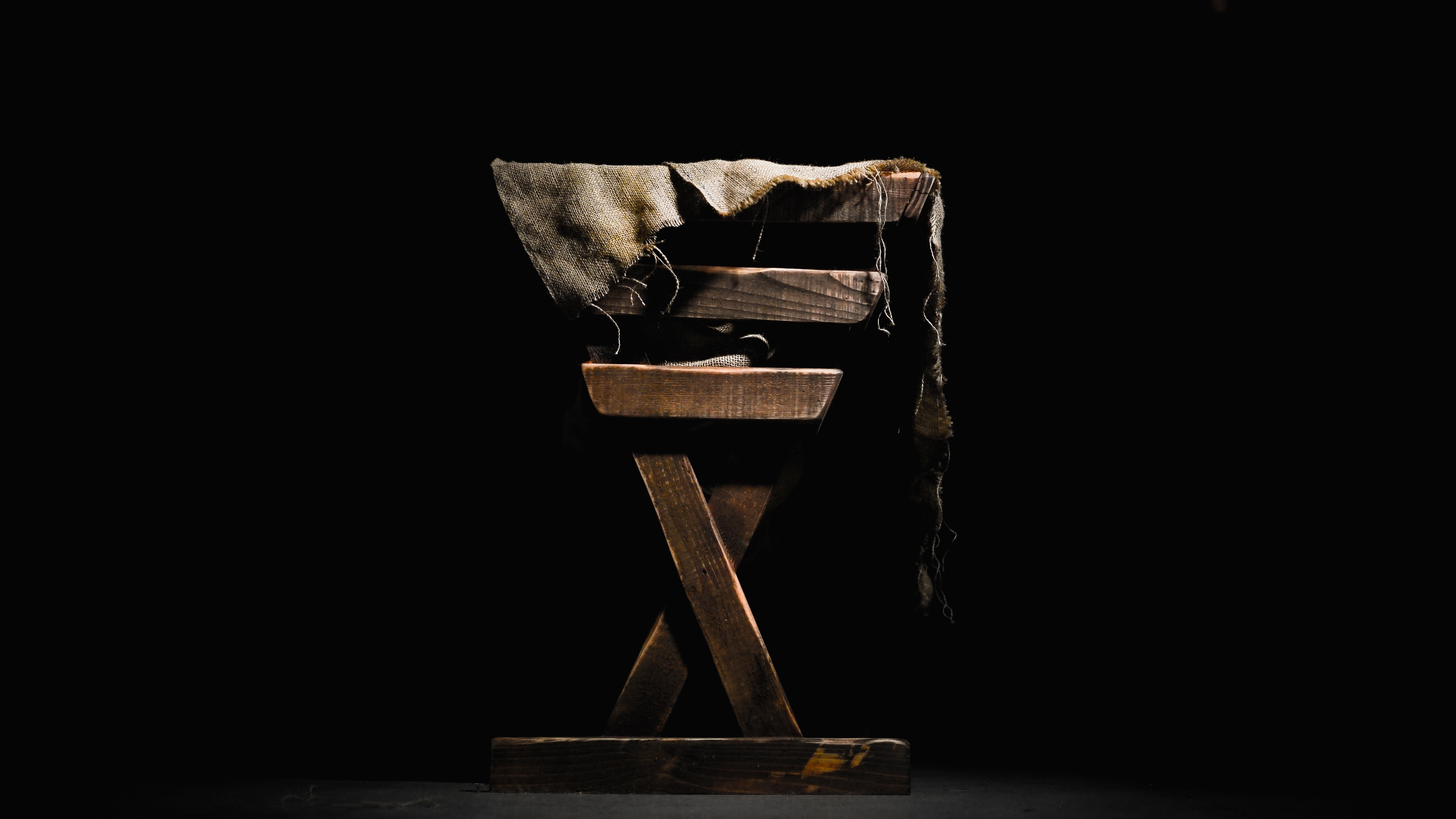
The sign in Luke 2 is an animal trough.
Luke says that Joseph and Mary had to go to Bethlehem to be registered in their hometown. While they were there she gave birth to Jesus and after his birth she laid him in a manger, another name for an animal’s feeding trough.
“And she gave birth to her son and wrapped him in swaddling cloths and laid him in a manger …” — Luke 2:7
THE SIGN IN THE NATIVITY
I don’t know about you, but this sounds quite unsanitary. In today’s delivery room, the level of care and cleanliness that nurses implement with a newborn is exhausting!
There is blue everywhere! Blue scrubs, blue gloves, blue paper blanket things that protect the baby from everything and everyone else in the room. It’s over the top but never too far. We want the newborn to receive the best care possible. To Joseph and Mary, our delivery rooms might look like a scene from a science-fiction movie where the doctors are conducting dangerous research with deadly chemicals. (The thing is, they wouldn’t even know about any of those things!) But I’m positive they’d wonder why there is so much blue in the room!
I’m sure Mary desired the same level of care for her baby that mothers today desire for theirs. Mary probably swaddled the manger itself before swaddling her baby like a mummy and laying him inside.
Immediately after Luke mentions the part about the mummy (swaddling), he goes to a field where shepherds are watching over their flock. He describes how an angel of the Lord appeared to them in the brightness of God’s glory and announces that a new baby is born in Bethlehem.
Considering there might have been many babies born that night, it might not have been that big of a deal. Except that it was an angel who gave the announcement and that the baby was described as a Savior who is Christ the Lord and that this baby could be found in a … manger.
The sign they would need to find him.
“And this will be a sign for you: you will find the baby wrapped in swaddling clothes and lying in a manger.” — Luke 2:12
And like the upbeat before the epic chorus kicks in, the word manger is the cue for the multitude of angels to suddenly appear with their chorus of praise.
“Glory to God in the highest and on earth peace among those with whom he is well pleased.” — Luke 2:14
Then they disappeared and the shepherds were left standing in the dark. The only thing left to figure out was which one of them could run the fastest into town.
If they were ever going to find a baby in Bethlehem they would need a sign. Despite so many of our contemporary nativity scenes, the shepherd’s weren’t going to find a baby with a glowing head or a group of angels sitting on the roof looking down with pleasure. A baby will be crying or sleeping and typically have parents nearby, but for the shepherds to find this baby they needed something else. The angel said that their clue, their cue and their confirmation to the Savior would be the sign spoken of … a manger.
“And they went with haste and found Mary and Joseph, and the baby lying in a manger.” — Luke 2:16
A SIGN OF THINGS TO COME
Three times Luke mentions the manger. When you think about it, there many details that have been left out of this story. Yet with all that is left out, Luke still makes a point to thread the story together with a feeding trough.
Starting with brand new parents who couldn’t get a decent room, to an angel making proclamations in a field, to shepherds in a foot race through the village streets, the manger is the pin that is dropped on Luke’s map to reveal the destination and link the chain of events.
But it’s not just for the shepherds. It’s a sign for us as well.
Luke tells of the birth of Jesus in the backdrop of the reign of Caesar Augustus, the supreme leader of Rome. He was the grand nephew and later, the adopted son, of Julius Caesar. Because Julius Caesar was considered a god, Caesar Augustus was viewed as “the son of God.” He eventually gained his place on the throne through a civil war. Augustus, meaning “exalted one,” inaugurated an unprecedented period of peace and stability throughout the Mediterranean region during his reign. To many, Caesar was seen as their savior and their provider of peace.
The people in the days of Augustus’ reign associated peace in the world with the current and temporary Caesar. So, it’s no coincidence that Luke announces peace on the earth with arrival of the infant and eternal Savior.
It’s an announcement that changes everything for his audience and it’s wrapped up in the sign of the manger.
It’s a sign to remind us that our Savior does not enter into our world with power and prestige but in weakness and humility.
It’s a sign to remind us that peace does not come with military strength or bold declarations but through the ministry of the cross and the power of reconciliation.
It’s a sign to point us to the peace that comes when you realize that the God who has always been is actually God with us now. God with me. In all my chaos and all my struggles, in all the busyness and distractions, I can turn to the Prince of Peace who arrived in a manger.
It’s a sign to help us understand that every time we see the manger, it’s as much about looking forward as it is about looking back. Looking forward to what God will do and what God can do in our lives.
It’s possible we’ve left the manger on the pages of the Bible and only bring it out with the other Christmas decorations, but it’s so much more than an ornament. The manger is not something to make us feel nostalgic. It’s a sign to remind us of the now and not yet reality of God with us. The peace we can know right now and the peace that will ultimately cover the earth.
This Christmas, when you see the manger, be encouraged. Have hope, know joy and be at peace. It is not just a cute detail from a story that happened long ago. It’s a sign of things to come for everyone who seeks it.
Merry Christmas!

 Jason Martin
Leave a reply to Debi Cancel reply