
And I’ve been thinking about the pathways of Advent
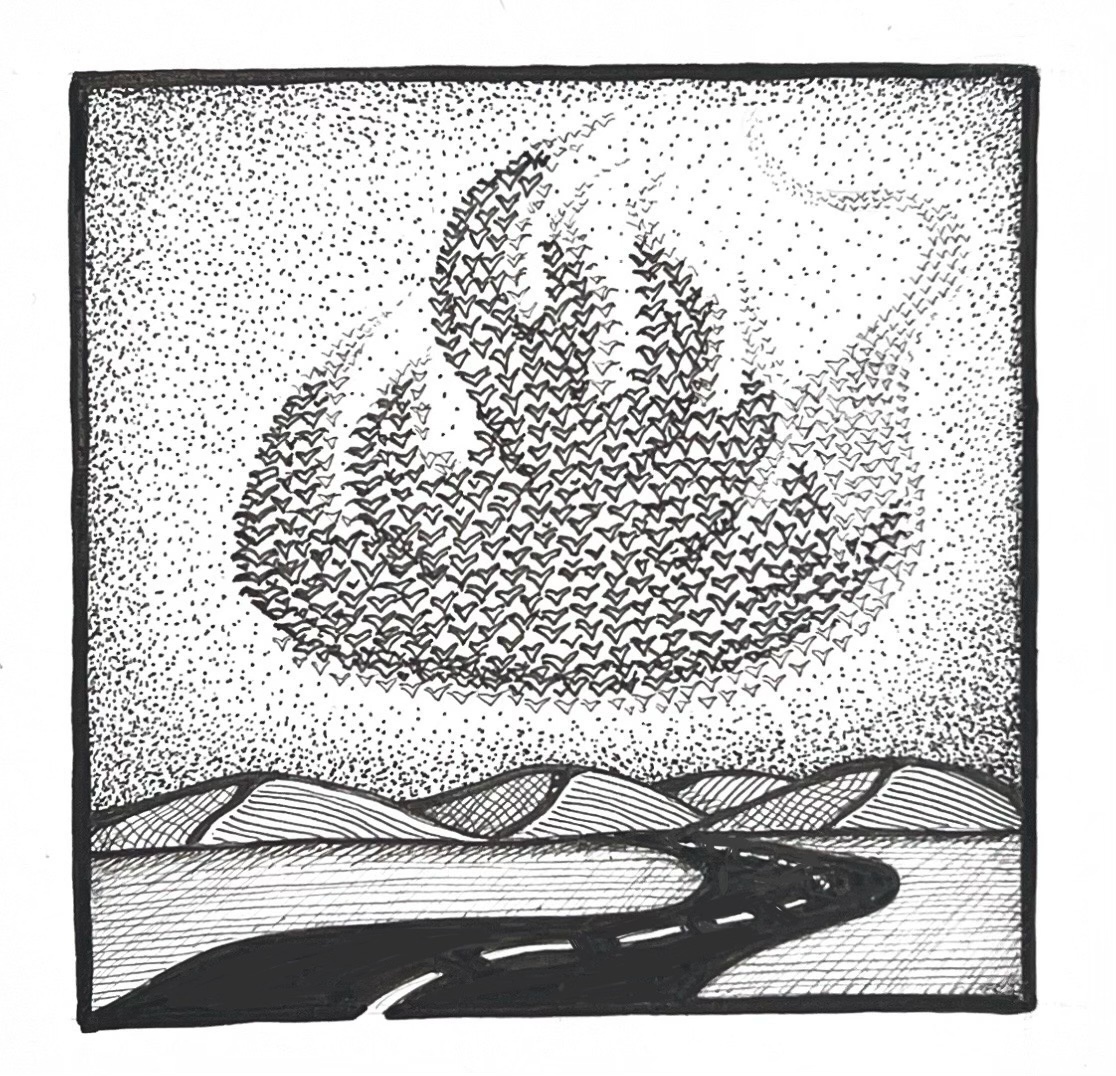
It doesn’t matter how short the trip is or if I’ve been to my destination one hundred times, I almost always have Maps up and running on my phone whenever I am driving somewhere.
There’s something about knowing where I know I’m going.
I like to see the exact time in which I will arrive to my destination. It might also be that I find comfort in the mindless submission to the blue line that leads me.
And maybe, to the point, I am the main character in the story on my screen. I am the blue arrow, always in the middle — between the road I’ve taken and the path I have yet to trod.
According to the map on my screen — that zoomed in rectangle of the whole entire planet earth — I am the center of the world.
(What I’m trying to say is that I can be very self-centered. Even when it comes to the road I’m on.)
But what if the path I travel isn’t actually my path?
What if someone else is the main character? What if someone other than me — who also happens to be my destination — is God moving toward me?
As an example, Psalm 25:10 says that, “All the paths of the Lord are mercy and truth, To such as keep His covenant and His testimonies.”
If I read the Bible the same way I follow my Maps, I will assume that I’m the main person on the path. I am the lone traveller. And according to this verse, I will find mercy and truth at the end of my path if I pursue the ways of God and the witness of others about Him.
This is likely true. But what if we read this verse in such a way that it’s not so much about the paths we take to God, but, as Augustine seems to suggest in his commentary of the Psalms, that these paths are what the Lord travels on in His coming to us?
“Therefore “all the ways of the Lord” are the two advents of the Son of God, the one in mercy, the other in judgment.” (Augustine of Hippo, 430 A.D.)
Even if we only understood the comings of God as two events on a timeline, we can see how His advents bring mercy and truth:
The mercy and justice of the cross, where all wrongs are suffered upon the Son of Man who dies. And the mercy and justice of His coming again, where all is made right by the Son of God who is risen. These two advent “events” represent the paths the Lord has taken.
He is the traveller who always comes in mercy and truth.
We will not fail to say this is always right about God.
He cannot be merciful while at the same time lie to us or about us. Neither can He tell us the truth about ourselves and fail to show us mercy.
“ALL the paths of the Lord are mercy and truth.”
He will not let sin go unforgiven and will not let sin go unpunished. Otherwise God wouldn’t be God and we could not be who He is saving us to be.
And even more than the two advent events, the reality is that God comes to us even now in other ways and by other paths. Ways that aren’t as the Son of Mary in a manger or as the Son of Man in the clouds.
In Chris Green’s book “All Thing Beautiful” he quotes Natalie Carnes who asks,
“Who is to say where, and in what way and by which images God might once again come to us bearing unanticipated forms of divine presence?”
And then he adds to her inquiry with reinforcement:
“God might once again come to us in any image —our faces, the surface of the sea, a murmuration, a ghost apple, this photograph, that coin, your child’s scribbled drawings. And this is so because creation is accomplished in what happened with Jesus of Nazareth.” (Pg. 169-170)
And because of what the Psalmist says, if we are keeping His covenant and hearing rightly the testimonies about Him, we will be met by His never ending mercy and God-honest-truth in His every arrival by whatever path He travels to find us.
As you hope in the Lord this Advent season, wait patiently for His coming, expect His arrival, and know that mercy and truth are always present in every path He takes to find you.
 Jason Martin
Leave a comment